Start with the roof
Measurements, orientation, pitch, obstructions, shading and drone evidence establish what can genuinely be used.

About Tom
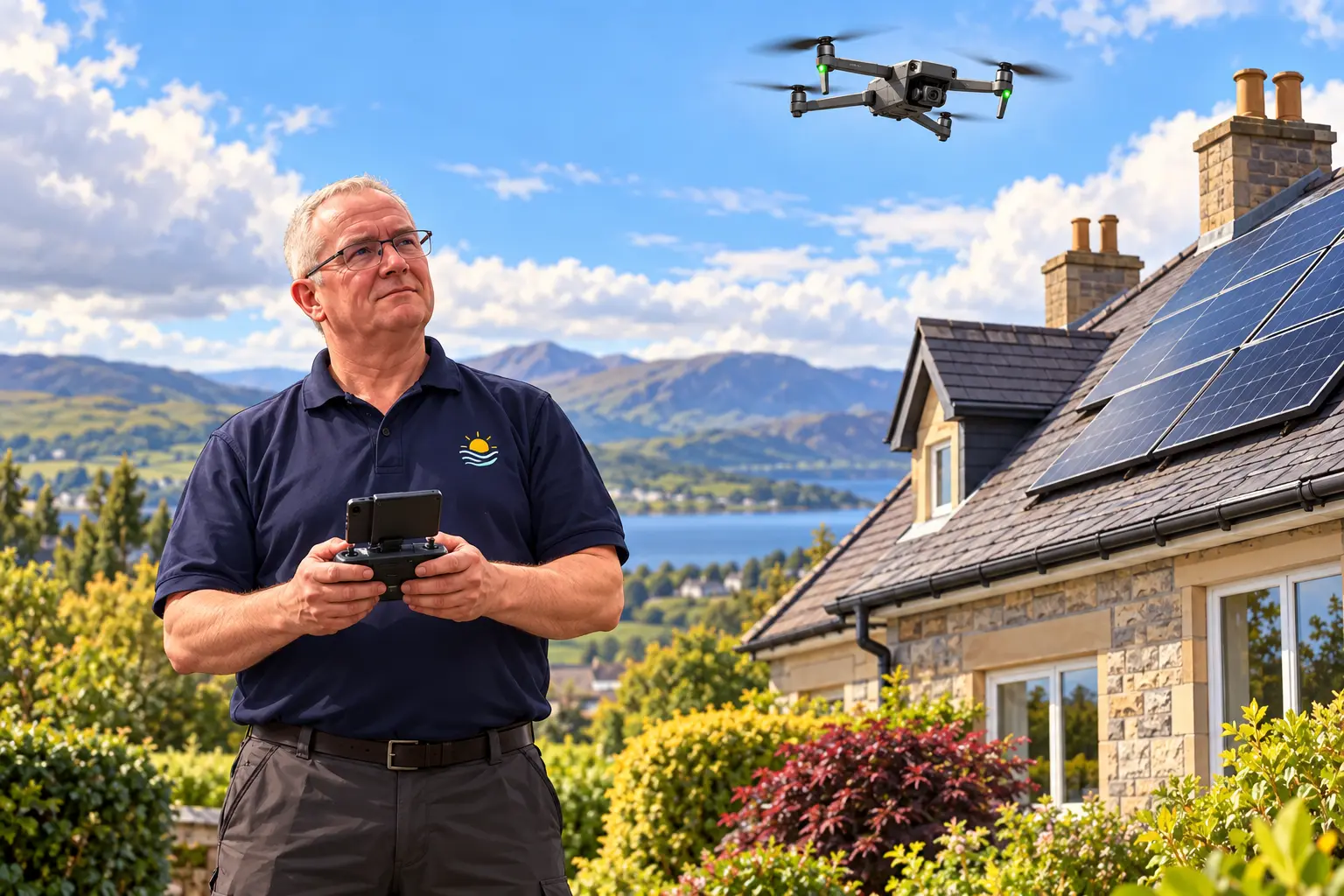
I’m Tom Kinnaird. I spend my working week visiting homes across Scotland, examining roofs, electricity supplies and the practical details that decide whether a solar proposal will work in the real world.
What experience changes
Two homes that look similar from the street can need completely different systems. Roof direction and usable space matter, but so do shading, electricity demand, the incoming supply, equipment locations, cable routes, Wi-Fi, access and what the household expects to change over the coming years.
That is why my surveys look beyond panel count. The aim is to collect enough evidence to explain what makes sense, what needs checked and what could cause trouble later.
Measurements, orientation, pitch, obstructions, shading and drone evidence establish what can genuinely be used.
Electricity consumption, an EV, a heat pump and when energy is used all influence panel, battery and inverter choices.
Metering, supply, loft access, equipment positions and cable routes can change an apparently simple design.
A homeowner should understand why a specification has been proposed—not simply be handed a list of products and a price.
What I record on site
Measured roof evidence, drone photographs, pitch, shading, obstructions, scaffold considerations and practical site access.
Meter and supply details, likely inverter and battery positions, EV charging requirements and Wi-Fi availability.
Possible cable routes, loft observations and structured information that helps designers and installers understand the property.
Clear about the relationship
I am a self-employed solar consultant working with Homeshield Scotland Ltd. Tom Solar provides practical information and the first property check.
If you decide that you want to discuss a solar quotation, your property and contact details can be passed to Homeshield Scotland Ltd only with your express permission. Finding your house or reading the guidance does not commit you to a survey, quotation or purchase.
What homeowners say about Tom
These comments were left independently by homeowners after solar appointments I carried out while representing Homeshield Scotland. They describe their experience of dealing with me personally; they are not reviews of services purchased from Tom Solar.
“Very professional and informative. Explained the products and services/benefits in depth. Left us to think things over without making us feel pressurised.”
Beverley Malcolm · Trustpilot
“Absolutely no pushy sales tactics, just straight up information to help make a good decision.”
Mr Dagan · Trustpilot
“Very friendly and knowledgeable and provided all of the information needed in an easy to understand manner.”
Ronnie McCabe · Trustpilot
“He answered all of our questions and made sure we fully understood the options.”
Eilidh Smith · Trustpilot
“Really informative, honest and answered every question I had. Wasn't pushing for the sale, just gave me all the information and benefits.”
Mr Bathgate · Trustpilot
“Explained everything well and professionally to help with my understanding.”
Miroslaw Pałacz · Trustpilot
Selected excerpts from reviews published on Homeshield Scotland's Trustpilot profile. Wording has been kept to the reviewers' comments about Tom's personal service and advice.
The honest answer matters
More panels are not automatically better. A bigger battery is not automatically better. A larger inverter is not automatically an upgrade.
The right answer depends on the house and how the people living there use electricity. Sometimes the evidence supports the system originally imagined. Sometimes it points towards a different design. Occasionally, the property or economics may not justify proceeding at all.
That possibility has to remain on the table if the guidance is going to be useful.
Start with your property
Use the aerial map to identify the correct Scottish property. I’ll look at the roof and decide whether a proper solar conversation is worthwhile.